
We all know Texas weather can be unpredictable. Knowing a storm might hit your neighborhood can be stressful, especially when you are not sure what kind of condition your roof is in. After a hailstorm passes, it helps to know what to look for so you can catch possible damage early.
One question a lot of homeowners have is how big hail has to be before it can actually damage a roof. There is no one exact answer because every roof is different. The age of the roof, the type of material and the overall condition, all matter. In general, once hail gets about quarter size or larger, the chance of damage goes up, but even smaller hail can sometimes cause problems, especially on an older roof.
It is also important to know not all hail damage is the same. Some damage is more cosmetic, meaning it affects how the roof looks. Functional damage is what affects how the roof actually performs and protects your home. That is the kind of damage that can lead to leaks or bigger problems later on.
Signs of Possible Roof Damage After a Hailstorm
One of the first things homeowners may notice is damage around the outside of their home. You might see dents on gutters, downspouts, metal vents, flashing, window screens, or even fences. Those things do not always mean the roof itself is damaged, but they can be a sign that the hail was strong enough to cause concern.
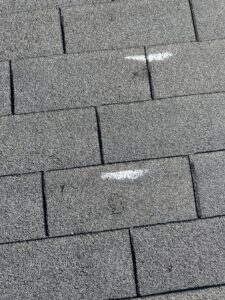
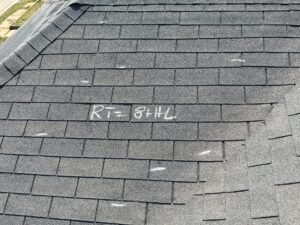
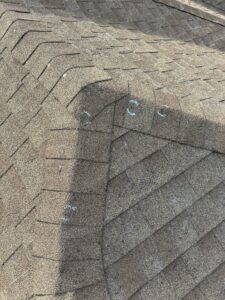
Another thing to watch for is shingle damage. Hail can knock granules loose, leave dark spots, or bruise the shingle. Sometimes damage is obvious, and sometimes it is not something most homeowners can safely see from the ground. That is why roof damage after a storm can be easy to miss at first.
You may also notice pieces of shingle or granules collecting in your gutters or around your down spouts. A small amount of granule loss can be normal over time, but after a hailstorm, more than usual can be a sign your roof took a hit.
Inside the home, keep an eye out for water stains on ceilings, discoloration, or any signs of moisture in the attic. Not every damaged roof leaks right away, but sometimes problems start showing up inside after the storm is already long gone.
Cosmetic Damage Vs. Functional Damage
This part can be confusing, so here is the simple version.
Cosmetic damage is damage that affects the appearance of the roof but may not immediately affect how it works. Functional damage is damage that affects the roof’s ability to protect your home. That can include bruised shingles, cracked areas, loss of protective granules, or damage that allows water to work is way in over time.
That is one reason it helps to have a roof looked at after a hailstorm, especially if the storm was strong enough to leave marks on other parts of the property.
What Homeowners Should Do After a Hailstorm
The first thing is do not panic. Not every hailstorm means you need a new roof. But it is a good idea to walk around your property and look for visible signs of damage from the ground. Check gutters, downspouts, screens, and other metal surfaces for dents or impact marks.
Take pictures of anything you notice. That can be helpful later if damage is found. Most importantly, do not get up on the roof yourself unless it is safe and you know what you are doing. A roof can be slippery, steep, or unsafe after a storm. In a lot of cases, what looks fine from the ground can still have damage that needs a closer look.
Final Thoughts
Hail damage is not always obvious right away, and not every roof reacts the same way to a storm. That is why it helps to know a few signs to look for and take action early if something does not seem right.
For homeowners in Abilene, TX, a hailstorm can come through fast and leave questions behind. Knowing the difference between normal wear and possible storm damage can help you make a better decision about what to do next.
If you think your roof may have taken hail damage, it is always better to have it looked at sooner rather than later. A simple inspection can help catch issues early and give you a better idea of what shape your roof is really in.